

How to Tell If Your Wine Needs Decanting
You open a bottle expecting it to taste smooth, balanced, and ready to enjoy. Instead, the first glass can feel tight, sharp, or a little flat. That is a common experience, and it usually has less to do with the quality of the wine than people think. In many cases, the wine simply has not had enough air yet. That is the reason decanting exists in the first place. Some wines need time and oxygen to soften, open up, and show more of what is actually in the bottle.
The real question is not whether decanting sounds like a good idea. It is whether the wine in your glass needs air to taste the way it should. Once you know how to spot that, it becomes much easier to know what to do next. For most people, that also means finding a way to get that result without having to wait.
When Decanting Is Not Necessary
It is just as useful to know when you do not need to decant. If a wine already tastes open, balanced, and enjoyable when poured, there is no reason to add an extra step. Older wines are a good example. They have already had years to develop, so extra exposure to oxygen can sometimes flatten them rather than improve them. Lighter reds, such as Pinot Noir, also tend to show well straight away without needing much help. Most crisp white wines fall into the same category. They are generally made to feel fresh and ready to drink as soon as they are opened. In these cases, decanting is usually unnecessary because the wine is already doing what it should.
What Decanting Actually Does
At its simplest, decanting is just exposing wine to more air. Wine sits sealed in a bottle, and when you first open it, some wines can feel closed off. The flavour may seem muted, the aroma may be quiet, and the overall balance may not feel quite right yet. When wine gets air, it starts to change. Harsh edges begin to soften, aromas become easier to notice, and the flavours start to feel more open and balanced. This is why a wine that feels average in the first few minutes can taste much better a little later.
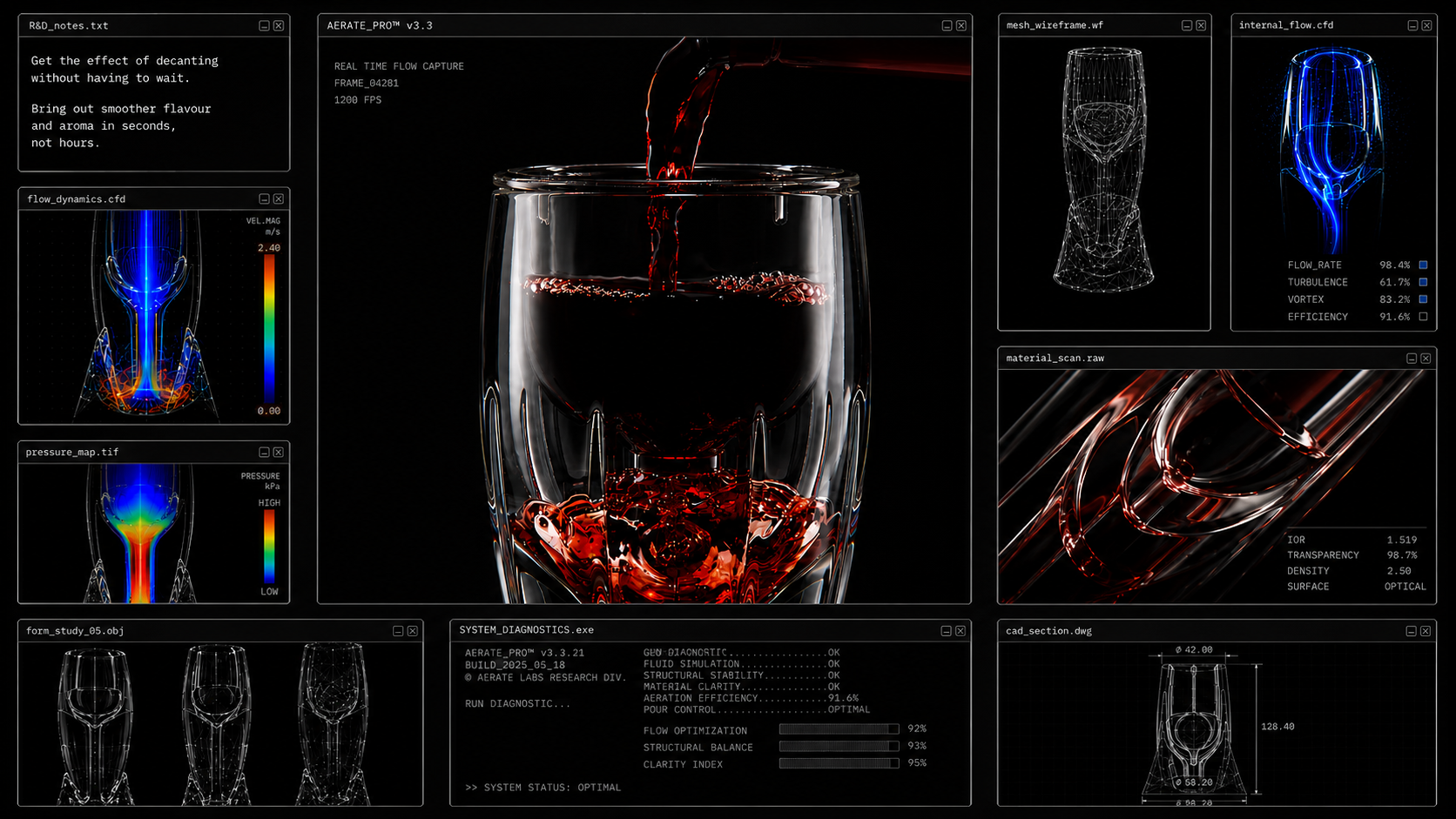
What decanting does is speed that process up. Instead of waiting for the wine to slowly improve in the glass, you give it more contact with oxygen earlier. The result is not a different wine. It is a wine that is closer to how it should taste. This is exactly what a wine aerator is designed to do, just instantly instead of over time.
Why Decanting Doesn’t Fit How Most People Drink
Even though decanting works, it comes with one obvious problem. It assumes you are opening the bottle well before you actually want to drink it. For most people, that is simply not what happens. Wine is usually opened when dinner is ready, when people arrive, or when the mood feels right. In that moment, waiting another 60 to 90 minutes is not very practical. Even people who know a wine would benefit from oxygen often skip decanting because it does not suit the situation.
That is why the same pattern happens so often. The first glass feels underwhelming, the wine slowly improves as it sits, and by the time it tastes right, a good part of the bottle is already gone. It is not that people do not understand the benefit. It is that the timing rarely lines up with real life. This is where using a wine aerator changes the experience, providing a method to decant that does not required 60 to i0 minutes.
How To Tell If Your Wine Needs Decanting
You do not need to know a lot about wine to work this out. In most cases, the signs are fairly obvious once you know what to look for, and they usually show up straight away in the glass.
The Wine Feels Tight or Closed
One of the clearest signs is when the wine feels like it is holding back. The flavour is there, but it does not seem fully open or expressive yet. It can come across as quiet, flat, or a little restricted. This is especially common in younger wines with more structure. You can often sense that there is more to the wine than what you are getting in the glass. If it opens up later, that is a strong sign it needed air from the beginning.
It Tastes Harsh or Unbalanced
Another common sign is when the wine feels rougher than expected. It may seem dry, bitter, slightly sharp, or harder on the finish than you thought it would be. Instead of feeling smooth and easy to drink, it feels like something has not settled yet. This is often what happens when the firmer parts of the wine are showing more than everything else. Once the wine gets air, those edges tend to soften and the rest of the flavour starts to come through more clearly. What felt harsh at first can become much more balanced.
The Aroma Is Faint or Underdeveloped
A wine that needs air will often smell more muted than expected too. You swirl the glass and bring it up, but there is not much happening. The aroma feels faint, or less expressive than it should be. That matters because smell is a big part of how wine is experienced. As the wine opens up, the aroma often becomes more noticeable and inviting. If the nose improves after a little time in the glass, it usually means the wine needed more air to begin with.
The Wine Improves Noticeably Over Time
This is one of the easiest signs to spot because most people have already seen it happen. You pour a glass, take a few sips, leave it for a while, then come back and realise it tastes better than it did at the start. The wine might feel smoother, more open, and easier to enjoy. That change is not random. It is simply the effect of air. If the wine improves that clearly over time, it would likely have benefited from decanting or aeration earlier on.
It Feels Disjointed
Sometimes the issue is not one specific thing. The wine just does not feel like it has come together yet. The acidity may stand out, the alcohol may feel a bit sharp, or the flavours may seem like they are sitting apart instead of working together. When that happens, the wine can come across as unfinished even if it is actually a good bottle. With a bit of air, those parts often settle into place and the whole wine feels more complete. If that happens consistently, it is usually a sign the wine needed decanting.
Which Wines Are Most Likely To Need Decanting
Not every wine needs the same treatment. Some wines are ready to drink when poured, while others are far more likely to improve with extra oxygen. Young red wines are usually the main ones that benefit. Wines like Cabernet Sauvignon and Shiraz often have more tannin and structure, which can make them feel tighter or harsher when first opened. Fuller bodied wines can behave the same way because they tend to be more concentrated.
Even more affordable wines can improve noticeably with oxygen. They can start off feeling a bit rough or closed, then become smoother and more enjoyable once they have had time to open up. This is where a wine aerator becomes especially useful, because it helps achieve that smoother result immediately instead of waiting for the wine to decant.
A More Practical Way To Approach It
Instead of getting stuck on whether you should decant, it is often more helpful to think about the outcome you actually want. The goal is not to follow a wine process for the sake of it. The goal is to make the wine taste better as quickly as possible. Swirling the glass can help a little, but it is limited. Decanting helps more, but requires planning hours ahead. A more practical approach is to introduce air as you pour. That gives the wine a chance to open up immediately, without having to delay drinking it. A wine aerator does exactly this, helping the wine become more approachable in seconds so you can enjoy it the way it should taste right away.
Why This Matters
When a wine shows well from the start, the whole experience feels different. You are not sitting there wondering if the bottle was a bad choice or whether it might improve later. You just enjoy it for what it is. That matters because most people do not want wine to feel like work. They want to open a bottle and feel confident it is going to taste good. They want the flavour, aroma, and balance to be there when the glass is poured, not after a long wait. That consistency is a big part of what makes wine more enjoyable. It removes uncertainty, reduces disappointment, and makes it easier to open bottles more often without second guessing the decision.
Frequently Asked Questions
Do wine aerators actually work the same as decanting
A wine aerator works by introducing oxygen into the wine as you pour. The result is similar to decanting, but instead of waiting 60 to 90 minutes, the wine becomes more open and approachable immediately.
Which wines benefit most from a wine aerator
Young red wines benefit the most. Wines like Cabernet Sauvignon and Shiraz often feel tight or harsh when first opened and improve quickly with aeration.
Can you use a wine aerator on everyday wines
Yes. In many cases, everyday wines improve just as much as premium bottles. A wine aerator can help smooth out rough edges and make the wine easier to enjoy straight away.
Do you still need to decant if you have a wine aerator
In most situations, a wine aerator replaces the need to decant. It gives the wine the air it needs instantly, without having to wait.
Will a wine aerator change the taste permanently
No. It does not change the wine permanently. It simply helps the wine open up faster so it tastes closer to how it should at that moment.
